


This week’s topic was a little different for me. I’ve spent a lot of time learning how to use AI tools, how to structure prompts, and how the models work under the hood.
But this week was less about the mechanics and more about the responsibility that comes with it.
As promised in my last post, the learning path I took this week focused on ethics, transparency, and the ripple effects of using AI in the real world.
If I’m being honest, a lot of it felt like common sense to me. But that’s probably because my own values already lean in that direction.
Still, it forced me to stop and think about how much accountability I need to take when I’m building content, learning in public, and using AI as a creative partner.
I want the work I’m doing to be open, honest, and something I can stand behind later. That means being clear about where my own human input stops and where the machine kicks in.
What I Explored and Where I Found It
After wrapping up my “Career Essentials in Generative AI” course last week, I leaned further into ethics. Specifically, I tackled another long-form learning path in “Responsible AI Foundations” on LinkedIn Learning.
The tone shifted a lot from last week. Less about what AI can do, more about what happens when people like me, (and probably you,) start using it.
As you’d expect, the instructors covered a wide range of topics. Data sourcing, transparency, bias, misinformation, responsibility, and even the legal gray zones that come with AI-generated content.
Turns out, there’s a huge issue right now surrounding copyrights and the data that the most popular AI models are trained on. Getting that sorted is going to have major implications for the future of AI.
None of what I learned since the last blog was earth-shattering, but it wasn’t fluff either. It forced me to slow down and think about how my choices ripple out beyond whatever task I’m working on.
One point that stuck with me in particular was just how important transparency is when you’re blending human and machine work. That’s already something I’ve been thinking about here. Full disclosure matters.
So, in that spirit and in case it wasn’t implied, I collaborate with ChatGPT on structure and framing for my blogs. However, the ideas, research, and final decisions on everything are real and they are fully my own.

What I Learned and How It Clicked
At the core of everything this week was one simple idea.
Context matters.
AI doesn’t operate in a vacuum. The choices we make about how we use it have ripple effects far beyond whatever task is in front of us.
A lot of what I heard boiled down to personal accountability. The models aren’t moral or ethical on their own.
They are machines based on fancy math.
They don’t know good from bad, right from wrong. They just generate based on what they’ve been fed. Ethical responsibility strictly belongs to us.
The lessons I encountered in the “Responsible AI Foundations” learning path reinforced something I think I already knew.
You can’t just think about what you’re trying to build when you’re working with these tools. You have to think about how what you build will interact with the people around you.
Getting to my goal means everything to me. I’m actively future-proofing my life with these tools and building these skills. But how I get to where I’m going and how I carry that responsibility with me as I move forward means a lot too.
My kids deserve the best version of me, and the best version of Donnie is someone who holds the line.
AI Terms/Definitions
I’ve been adding new terms to my glossary every week to help lock these ideas into place. This week was lighter on heavy jargon, but a few stood out and deserve a spot on the list.
As always, these aren’t dictionary-perfect. They’re just how I understand them right now, based on what I’ve seen and read this week.
Reinforcement Learning
A type of machine learning where the model learns by trial and error. It gets a reward if it makes a good decision, and a penalty if it doesn’t. Kind of like training a dog, except faster and it’s all math instead of treats.
Hallucinations
When the AI confidently generates information that sounds correct but is completely wrong or made up. Basically, it’s a very convincing lie that the model doesn’t even realize is false.
The machine being “confidently incorrect” is one of the most dangerous aspects of AI. This is why you should always verify your outputs.
Human in the Loop
The AI does the work, but a human keeps a hand on the wheel. Instead of letting the model run wild, people stay involved to check the results, make corrections, or guide it where needed. It keeps the machine useful without letting it get stupid or unethical.
Retrieval-Augmented Generation (RAG)
A technique where the AI pulls in outside information before generating its response. Instead of only relying on its training data, it searches a separate database to boost accuracy. Think of it like giving the model extra notes to check before it answers.
Accountability (in AI)
Human responsibility in the use of artificial intelligence. Accountability means being transparent about how AI is used, where the data comes from, (if we know,) and who is responsible when things go sideways. The machine does not own responsibility or have accountability. We do.

Creators I’m Now Following
I’m trying to build better habits around how I consume content. The random rabbit holes aren’t going anywhere, but now I’m steering them toward creators and channels that actually feed this new obsession with AI. If I’m going to keep learning, I want my scroll time working for me.
So, less random scrolling, more… intentional rabbit holes. These are a few of the voices I’ve added to my feed this week, focused on YouTube:
Aakash Gupta
Focused on AI-powered productivity, real-world tools, and how creators and businesses can actually apply AI to grow. Fast-paced, practical, and appears to always have something immediately useful.
https://youtube.com/@growproduct?si=P2yRSILtSVmx3sPv
AI Foundations
A solid mix of simple explainers on technical AI concepts, ethical considerations, and model mechanics. If you want to build your AI vocabulary without needing a PhD, this one seems great.
https://youtube.com/@ai-foundations?si=y1bH-7ydNcoP1nni
Tina Huang
Personal learning, data science, career-building, and how to learn AI as a non-traditional student. I like her transparency about the ups and downs of trying to master these tools. Very relatable.
https://youtube.com/@tinahuang1?si=SqBtVWmjZ4YJNet7
Anthropic AI
Official channel from one of the leading companies working on alignment, safety, and responsible AI research. Heavier stuff, but important.
https://youtube.com/@anthropic-ai
Next Steps
Now that I’ve spent some time looking at the ethical side of AI and internalizing it, it’s time to get tactical again. Next week I’m shifting my focus back to Prompt Engineering, since I thought it was interesting.
It also helps knowing that it’s one of the most valuable skills I can sharpen up for my future career.
The more I study this space, the more convinced I am that knowing how to talk to these models is what separates casual users from serious professionals.
I’ve made my decision. Becoming a master of prompt engineering will be my first step towards becoming an expert in AI.
Also, this gives me a chance to introduce and start putting my new Prompt Trainer into action. It’s a tool I built to help myself (and others) turn vague ideas into clear, actionable prompts.
If you’re curious, you can check it out here: Futureproof Prompt Trainer.
It’s free and it’s designed to help train the way we think when developing a prompt. I used the PDF to develop the shared GPT model, so I know it works. The PDF is drag and drop simple. Give it a shot.
Conclusion
This week reinforced something I probably already knew but really needed to say out loud. The tools are powerful, but the responsibility is ours.
It’s not just about what I can build with AI, it’s about how those choices ripple out and affect others.
I feel like I’ve taken another real step forward. The ethical side of AI isn’t a checkbox. It’s built-in or it’s broken.
I can’t build anything useful if I’m not willing to own the process, stay transparent, and keep my hands on the wheel as these tools evolve.
Next week, it’s back to the fun stuff with Prompt Engineering. But everything I do going forward is going to sit on top of what I’ve locked in here.
Responsibility isn’t optional.
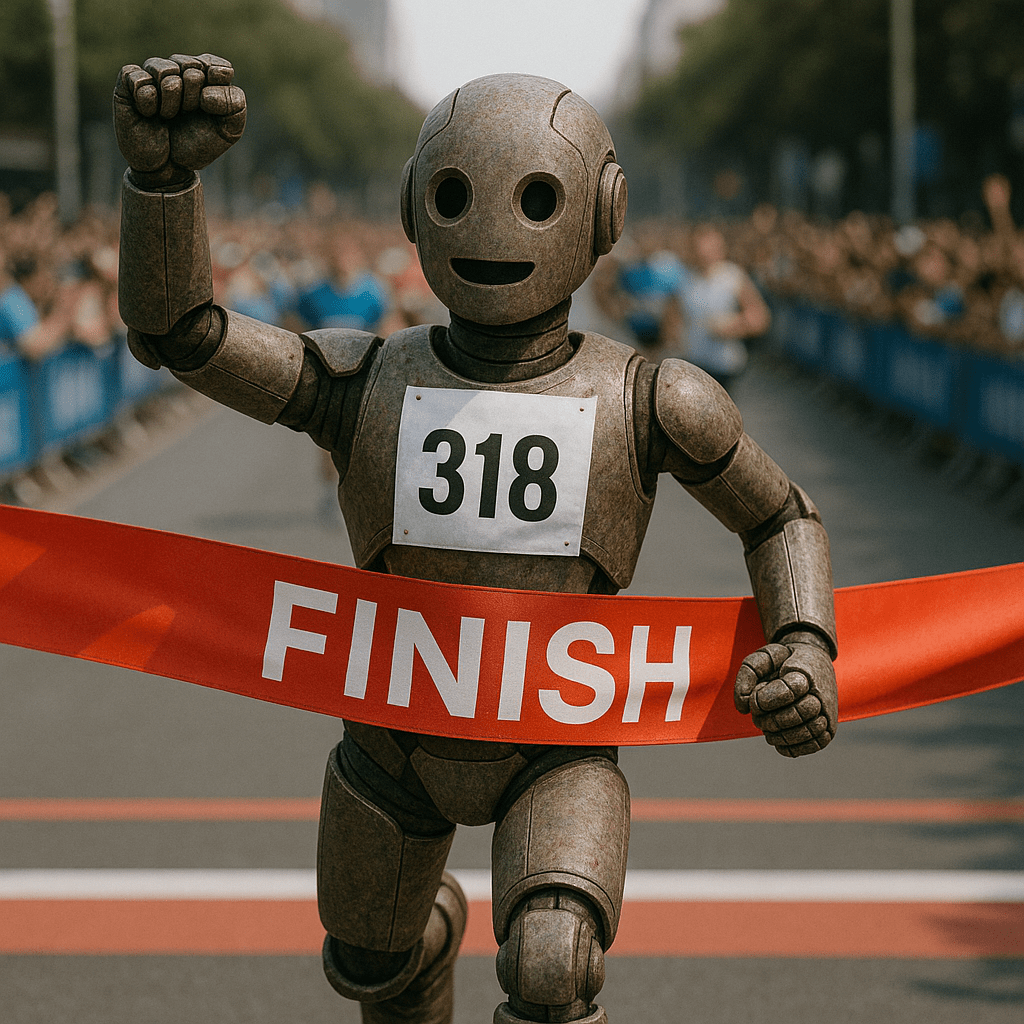
Be honest. How do you handle accountability in your AI use? How transparent are you really? Do you feel comfortable answering those questions, or do you think there’s room to improve? I’m not perfect, but I am committed to being transparent as I keep learning.
