

After graduating with a Digital Marketing degree in 2026, I stepped straight into one of the most competitive tech job markets in years.
Here’s what it feels like.
The Empty Finish Line and the 2026 Job Market
I submitted my last assignment and waited to feel something. Relief. Pride. The particular exhale that’s supposed to come after years of work finally paid off. None of it came.
What I felt instead was emptiness. Not the peaceful kind. The hollow kind. Graduation day itself was carried almost entirely by the people around me, the reactions on the faces of people I love. Whatever pride existed lived in them more than in me.

For myself, it felt less like crossing a finish line and more like ticking off the last checkbox on someone else’s to-do list before you get to work, only to realize there’s a whole other side you hadn’t seen yet.
That’s probably the most honest thing I can say about graduating into the 2026 tech job market: the degree didn’t feel like an ending. It felt like permission to start something harder.
Now, a week into the job search with no class schedule to hide behind, I’m starting to understand just how different that other side looks.
The Reality of the 2026 Tech Job Market for New Graduates
I didn’t start my job search after graduation. I started almost a year ago, ramping up steadily as the finish line got closer. Hundreds of applications. A handful of rejection emails. Zero callbacks.
Early on, a weak resume was an easy explanation. But in the last month or two, the resume has been as strong as it’s ever going to be, built on real-world experience doing the exact work I’m targeting, and the results haven’t budged. Not a single interview.
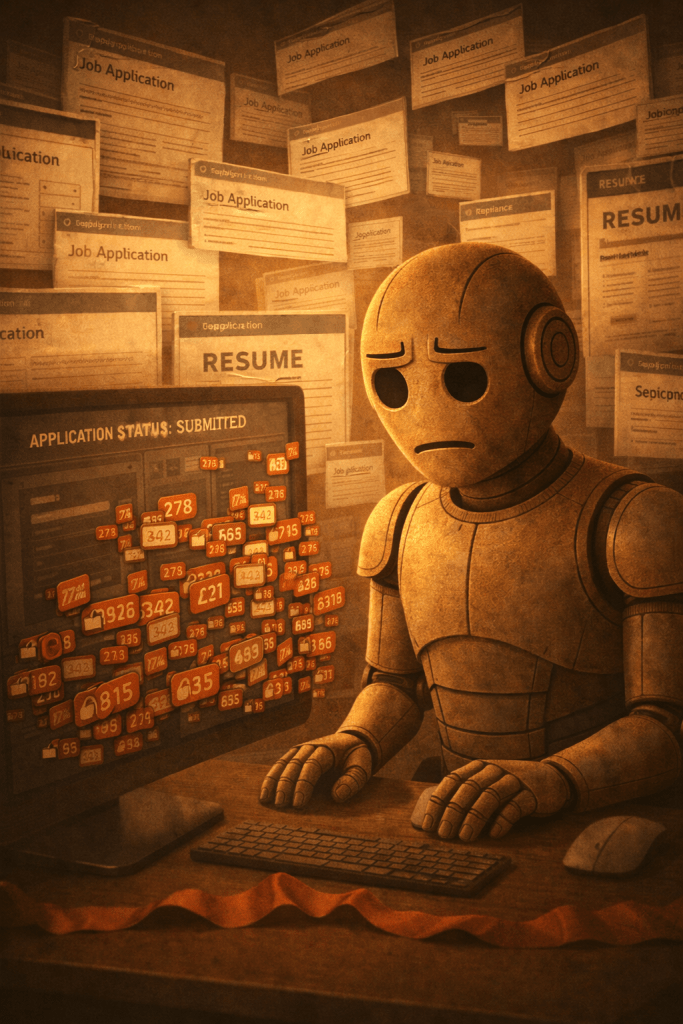
Here’s what I’ve concluded: job boards like LinkedIn and Indeed are functionally broken for new applicants right now. A position posted less than an hour ago already has over a hundred applications by the time you see it. Every role. Every search.
At that volume, your application isn’t even being read. It’s being filtered, probably by an ATS (Applicant Tracking System) before a human ever lays eyes on it. If you’re not optimizing for ATS keyword matching, you’re literally not even in the game.
The only realistic path I think I’ve found to actually getting hired in tech right now is knowing someone who’s hiring and telling them you’re interested. Networking is now the job, and it’s genuinely something I’ve never had to practice before. I’m actively working on it and looking for every opportunity to do it more.
Unfortunately, the application wall is only part of the problem.
Why Entry-Level Jobs Aren’t Entry Level Any More
Everyone wants a minimum of two years’ experience for every “entry level” position, and five years for anything above it. I understand that companies don’t want to spend months training someone. They have a role that needed to be filled yesterday and they want someone who can hit the ground running.

The message is pretty clear: if you haven’t already done the job somewhere else, you’re not qualified to do it here. But I would argue that if you want the person who left your company so badly, why not reach out and ask if they’d come back?
Save people like me the effort of sorting through postings for work we can absolutely do, given half a chance and a little guidance. But it seems like the work that used to be relegated to new hires is being entrusted to AI models.
AI really does seem to be changing everything. And companies that are hiring expect you to already know how to use it.
AI Skills vs ATS Systems in the Modern Job Search
I’ve been upskilling with AI tools since I started this blog, so I feel reasonably well-positioned there. I’ve been trying to lean into that angle in my applications and personal brand.
It hasn’t moved the needle on callbacks yet, but I still think it’s the right bet long-term.
The one tool that is non-negotiable for any job seeker right now isn’t generative AI at all though. It’s understanding ATS.
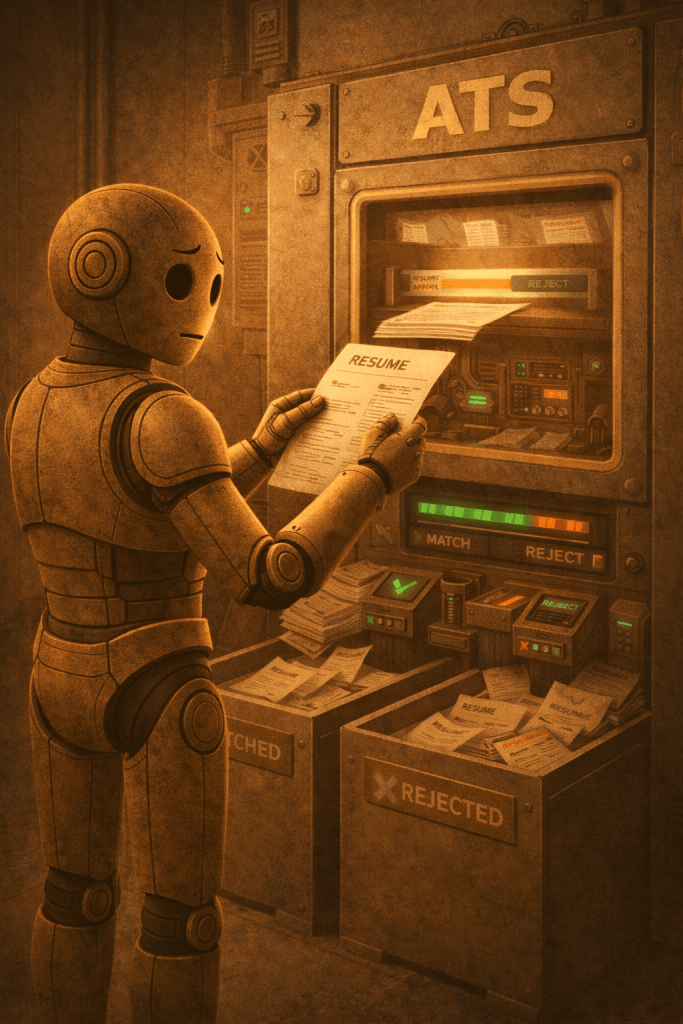
If you’re applying through job boards without optimizing for applicant tracking systems, you could be the most qualified candidate in the pool and still never reach a human recruiter. That’s the real gate in 2026, and most people don’t even know it’s there.
But knowing the tools matters a lot less when you can’t even get past the front door, and the clock is ticking on getting through it.
Student Loans and the Clock Ticking for New Graduates
My student loans come due in September. My current income doesn’t cover them alongside everything else my family needs. The math doesn’t work and I’m fully aware of it at every moment of every day.
Right now, the pressure feels like a light training jacket on my chest. Present, but manageable. But when I look a few months out, I can see it becoming something much heavier.
Ever thought about what it would feel like to carry an elephant on your shoulders?

So, to avoid that, if nothing changes by August I’m looking at taking on a second full-time job in a field that has nothing to do with my degree. At which point the honest question becomes: what exactly was the point of the last few years?
I don’t say that to be dramatic. I say it because it’s the real consequence sitting at the end of this road if the job search doesn’t break the right way, and pretending otherwise wouldn’t just be dishonest. It would be disrespectful to the people depending on me for their well-being and quality of life.
That’s why I think the plan for 2026 tech graduates like me has to be broader than waiting for LinkedIn to come through.
The Roads Forward: Freelancing vs Full Time Jobs for New Tech Graduates
I don’t see a world where I’m not in a marketing role within the next twelve months. Even if I have to drop my salary expectations down to whatever covers the loans and creates a little breathing room, I’ll do it.
The goal was always to build a better life for my kids. Accepting the bare minimum feels like a betrayal of every promise I made them on the sleepless nights and the Saturdays I spent in front of a laptop instead of with my family. But I’m not waiting for a job board to save me.

On the literal day I graduated, someone in my network reached out about developing a marketing plan for a business they had to put on hold during the pandemic.
I’m working on it, and once it’s done, it’s going on the resume as freelance work. I’m also starting to explore freelance job sites and actively looking for more opportunities like it.
Freelancing while working full time might be the most realistic path for a new tech graduate in this market. It’s a way to build the experience the “entry level” jobs are already demanding, while still paying the bills. It’s not the plan I imagined, but it’s a real one and it’ll keep my skills sharp.
Like I said at the beginning, graduating into the 2026 tech job market doesn’t feel like crossing a finish line. It feels like ticking off the last checkbox on someone else’s to-do list. But now I’m on the other side of the page. And it’s time to figure out what’s in the next box I have to check.

If you’re navigating this market too, I’d love to know: Are job boards still working for you, or are you ready to give up on them like I am? And if you’ve cracked the networking piece, what actually moved the needle?
If you’re on the other side of the table and hiring right now, what does a new grad have to do to get your attention?
Drop your thoughts in the comments. And if any of this resonated, follow the blog or connect with me on LinkedIn. I’ll be documenting this whole journey in real time, the wins, the dead ends, and everything in between.
