
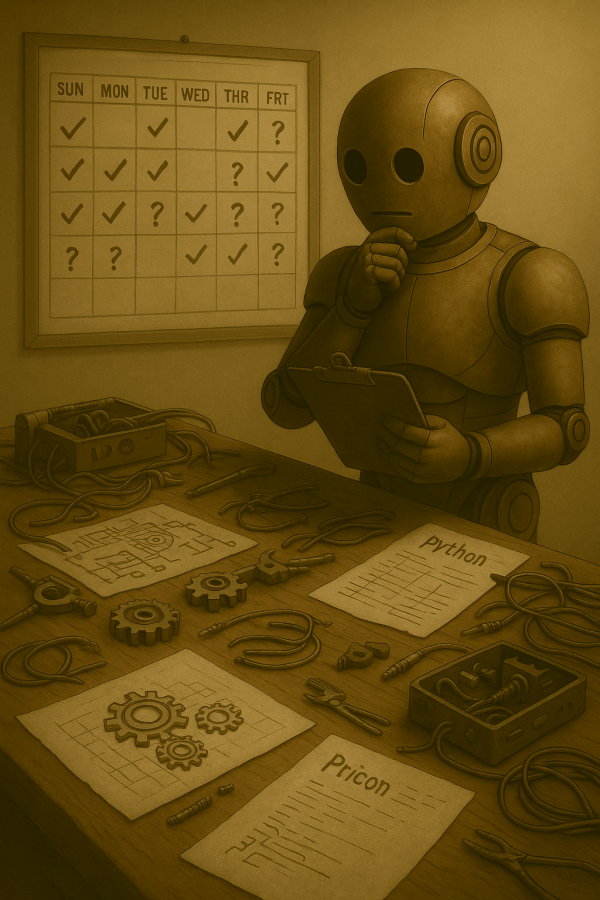
I didn’t publish last week. Something important came up that pulled me away completely. It was good news, the kind you don’t ignore, and I used the time to handle it.
Still, I managed to get a focused learning block in, and when I sat down to do it, it felt like a reward. Not the act of coding specifically, but the experience of pushing something forward on my own terms.
However, I’ve been carrying the same question for weeks now: is Python still where I should be putting most of my attention? Not because I’m bored with it or hitting walls, but because I keep wondering if there’s a more direct path to building the tools I actually want to make.
It’s not doubt about my ability to learn this stuff. It’s doubt about whether this particular learning curve is taking me where I need to go. I made a decision during my week off. Now, allow me to explain.
AI Tools and Courses I Tried This Week
This week split between Python practice and something that felt more like real preparation. I finished building a price tracker that scrapes product pages and sends alerts when prices drop below a target.
Technically, it works fine. I can point to clean code that does exactly what it’s supposed to do. But I keep staring at it wondering when I’d ever actually run the thing.
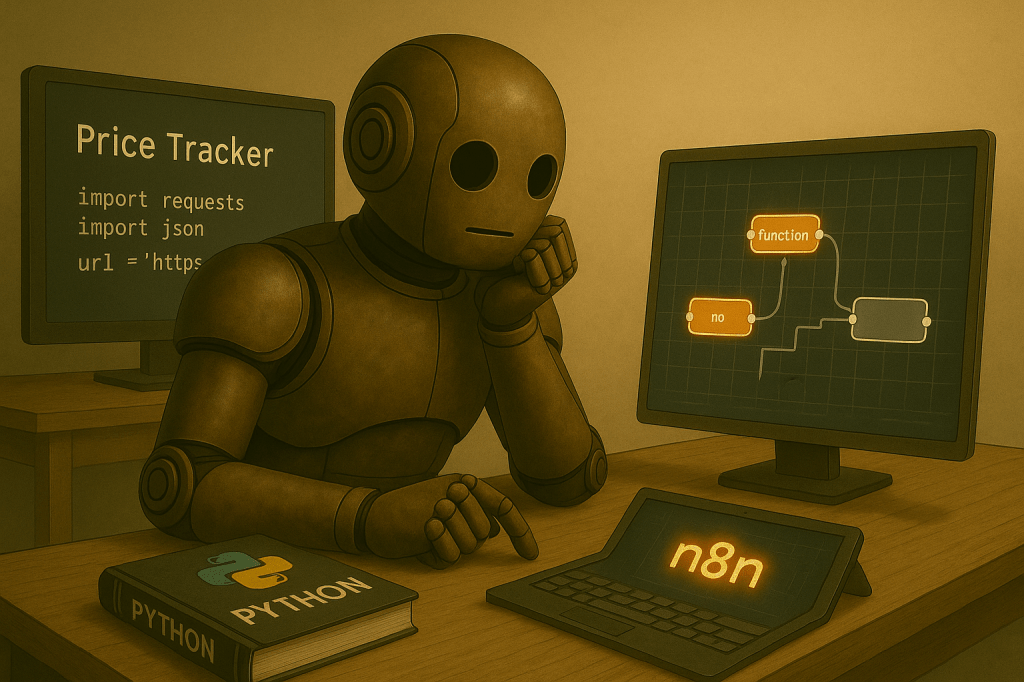
The LinkedIn Learning module on agentic AI was different. It wasn’t revelatory, but it felt connected to what I’m actually trying to build. I’ve been talking about workflow automation and turning that into a business for months. This course felt like finally taking a step toward doing it instead of just circling around it.
I also spent time researching n8n but didn’t pull the trigger on an account yet. The monthly cost isn’t huge, but it’s real money when you’re still in the “learning to learn” phase instead of the “earning while learning” phase. That gap is becoming harder to ignore.
Mapping My AI Learning Curve
The price tracker worked perfectly, and I felt good about that. I executed the exercise correctly, learned more about Python and BeautifulSoup, and can point to functioning code.
But there was something else there too. A quiet recognition that while I’m getting better at building things that work, I’m not necessarily building things that matter.
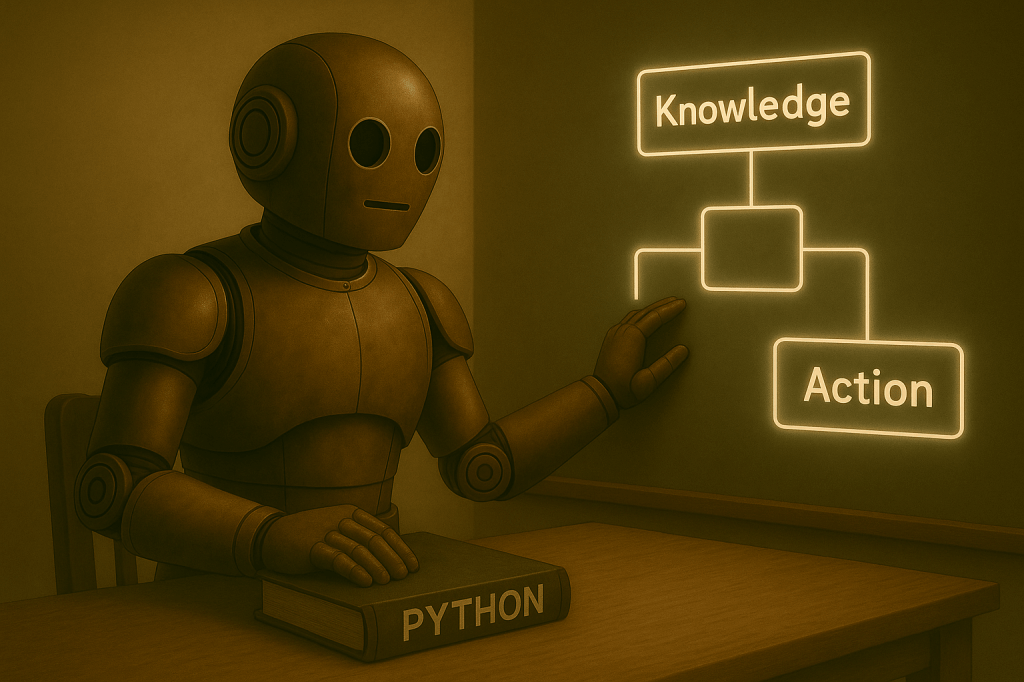
The Python path hasn’t been a waste. It’s taught me how to think more like a machine, how literally everything gets implemented. That understanding will carry forward no matter what tools I end up using. But I keep coming back to the same question: is this the most direct route to where I want to go?
The gap isn’t really technical knowledge anymore. I think I understand enough about AI to figure out how to solve problems with it. What I’m missing is the ability to identify which problems are worth solving.
I can build solutions all day, but if I don’t know how to spot the real problems, I’m just making tools nobody needs.
AI Terms/Definitions
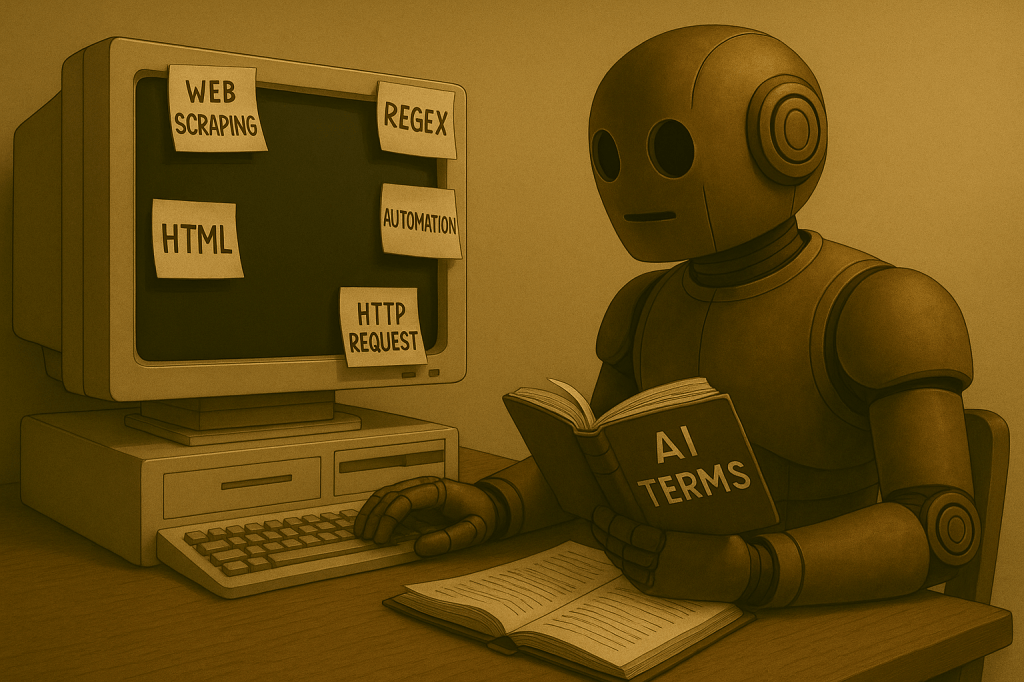
I’ve been adding new terms to my glossary every week to lock these ideas in place. As always, these aren’t dictionary-perfect. They’re just how I understand them right now, based on what I’ve seen and read so far in my journey
Web Scraping
This is basically teaching your computer to read websites the same way you do, but automatically. Instead of you manually copying and pasting information from a webpage, you write code that goes to the site, finds the specific information you want, and pulls it out for you.
Like having a robot that can visit Amazon, find product prices, and write them down in a spreadsheet.
HTTP Request
This is how your computer asks a website for information. Every time you click a link or type in a URL, your browser sends an HTTP request that basically says “hey, can you send me this webpage?” The website then responds by sending back the HTML, images, and other files that make up the page you see.
HTML Parsing
HTML is the code that makes up web pages. All the text, links, and structure you see. Parsing means taking that messy code and breaking it down so your program can find specific pieces of information.
It’s like having a smart filter that can look at a webpage’s code and say “here’s the headline” or “here’s the price.”
Regular Expression (Regex)
Think of this as a super-powered search function. Instead of just searching for exact words, regex lets you search for patterns. Like finding all phone numbers in a document, even if they’re formatted differently. It’s incredibly useful but looks like gibberish until you learn how to read it.
Automation Script
This is a small program that handles repetitive tasks for you. Instead of manually doing the same steps over and over, you write a script that does them automatically. Like a script that checks your email, finds certain types of messages, and files them in the right folders without you touching anything.
Top AI Voices to Follow
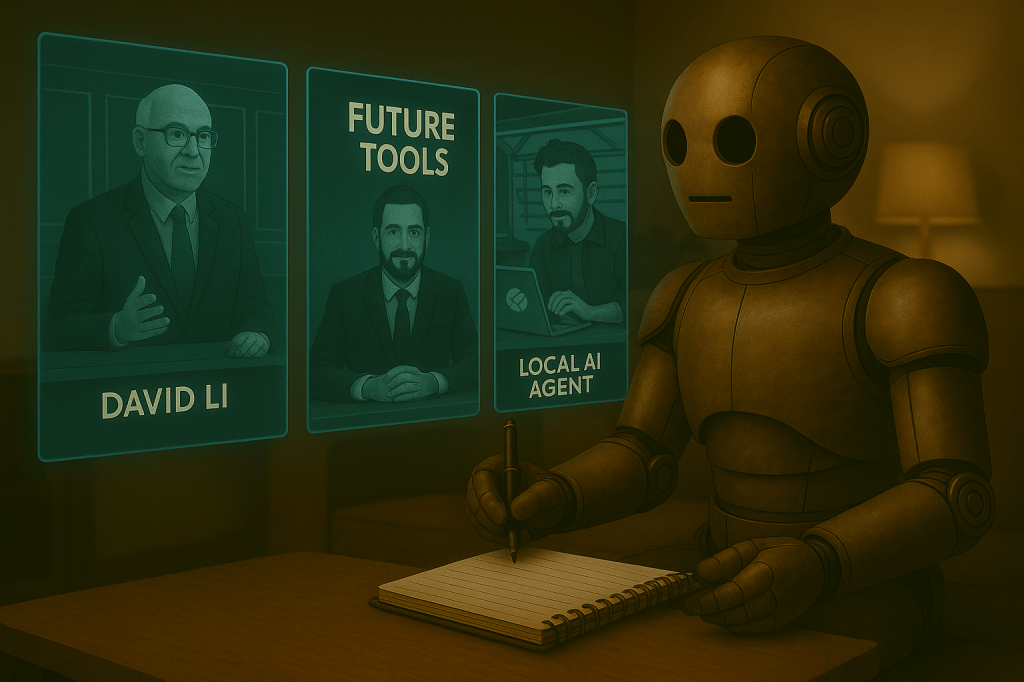
David Linthicum (LinkedIn Learning Instructor)
Instructor of Agentic AI Fundamentals, Linthicum breaks down multi-agent systems, autonomous workflows, and the future of adaptive AI in a way that actually feels connected to what I’m trying to build. It’s high-level, but not disconnected from application.
If you’re serious about automation and decision frameworks, this is worth the time.
Matt Wolfe
YouTube: AI News: Adobe Just Gave In to Google’s AI
I’ve become a big fan of this channel. Matt consistently brings clear breakdowns of AI industry news, especially when it comes to major players like Google, Microsoft, and Adobe. His weekly videos feel like catching up with a plugged-in friend who actually reads the source material so you don’t have to.
Lucas Walter / The Recap AI Automations
YouTube: I Built A Fully Local AI Agent with GPT-OSS, Ollama & n8n
New channel for me, but immediately relevant. He’s doing exactly the kind of work I’ve been circling and I’m going to explore more. This seems to be right up my alley.
After all, he’s building agentic workflows with open tools and talking through it plainly. I haven’t watched the full episode yet, but this is the kind of content I need more of in my feed.
Next Steps in My AI Journey
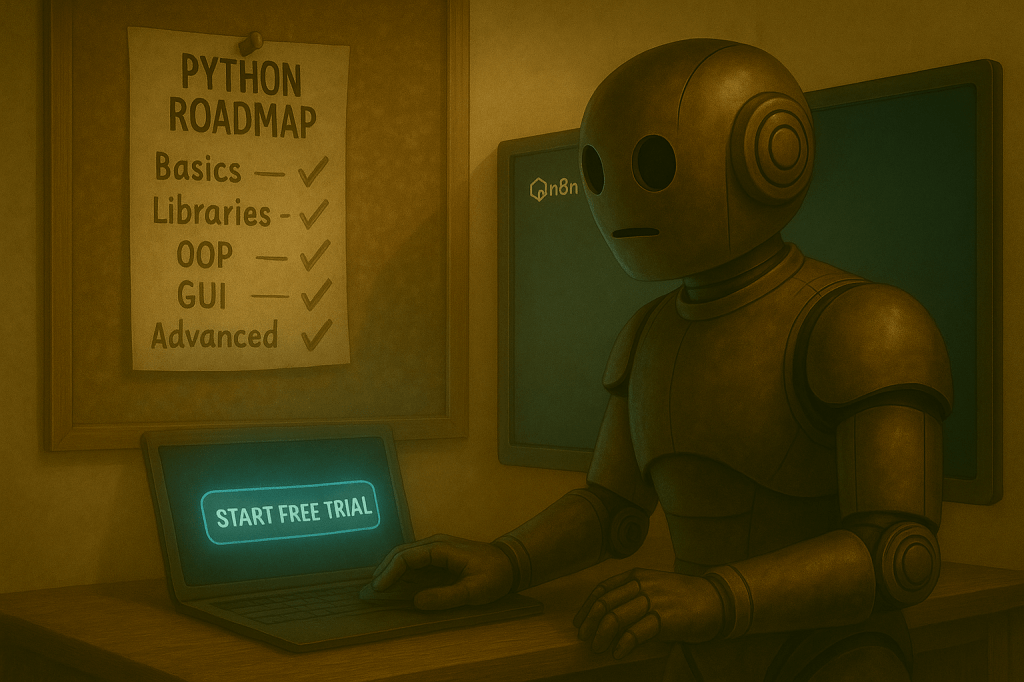
I’m at a decision point. I can continue with the Python roadmap for another week, or I can pivot to something more directly connected to what I want to build.
I’m going to be using n8n’s 14-day free trial to create an automated AI news compilation workflow for YouTube. This would be hands-on practice with the actual work I want to be doing.
Building workflow automation systems, instead of another learning exercise that might not connect to anything real, anytime soon.
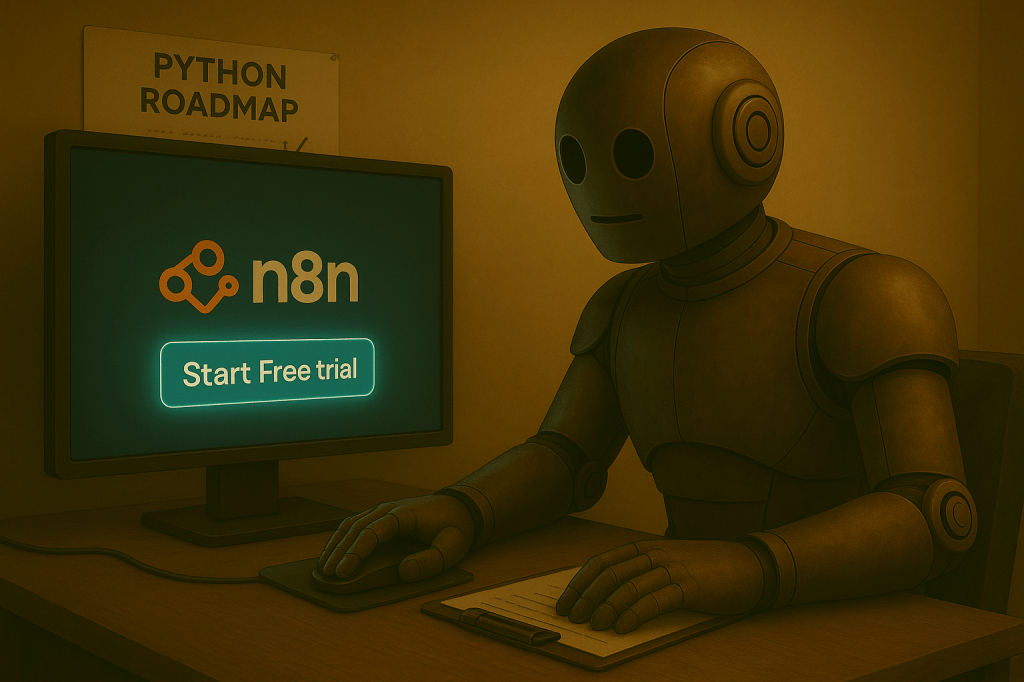
I’d be creating something that could grow my existing channel while teaching myself the skills I want to turn into an actual business.
It’s a choice between continuing to build foundation or jumping into the deep end with something practical. The more I consider everything, the more the practical option feels like the right call.
Closing the Loop
I keep coming back to the same tension. My head tells me to stay consistent with the learning plan, keep building foundation, be methodical about this whole thing. But my heart keeps saying just fucking do it.
Every time I scroll through social media and see another successful entrepreneur talking about taking action over endless preparation, it gets harder to argue with that voice.
Being a broke dad makes every decision feel weighted. I can’t afford to waste time, but I also can’t afford to spend forever getting ready for something I could be doing now.
The thing is, I’m 38 years old and I’ve had to start over from scratch a couple of times already. I know failing is part of life. Failing sucks, but I can handle it.
What actually terrifies me is regret. I don’t want to keep feeling like I’m not doing enough or wasting time when I could be building something real. Maybe next week is when I stop preparing and start doing.
What about you? Have you ever felt stuck between “learning more” and “just starting”? How do you know when it’s time to stop preparing and start building? Drop a comment and let me know. I could use the perspective.

One response to “FPLog 14 – Python Learning vs Real AI Projects: Finding the Balance as a Beginner”
[…] mentioned last week, I paused my Python learning this week to explore n8n, the automation platform that keeps popping […]
LikeLike